Little Wandles Phonics
At Our Lady’s we want our children to have a love for reading that remains with them all of their life. The teaching of early reading and phonics is key to forming that love of reading and the texts read by children must be phonically decodable, matching the recent learning in school, to promote overlearning and embedding of the new sound or phoneme. This helps children to know more and remember more.
To support the teaching of phonics and early reading we use Little Wandle Letters and Sounds. Please see our presentation which details exactly how phonics is taught by our staff.
Why Little Wandle?
- Excellent training for all staff to ensure consistency
- Every aspect of phonics and reading included in a detailed, thorough and systematic approach
- Engaging resources without distracting from the learning
- Comprehensive system for identifying and supporting children requiring extra help and useful support for parents.
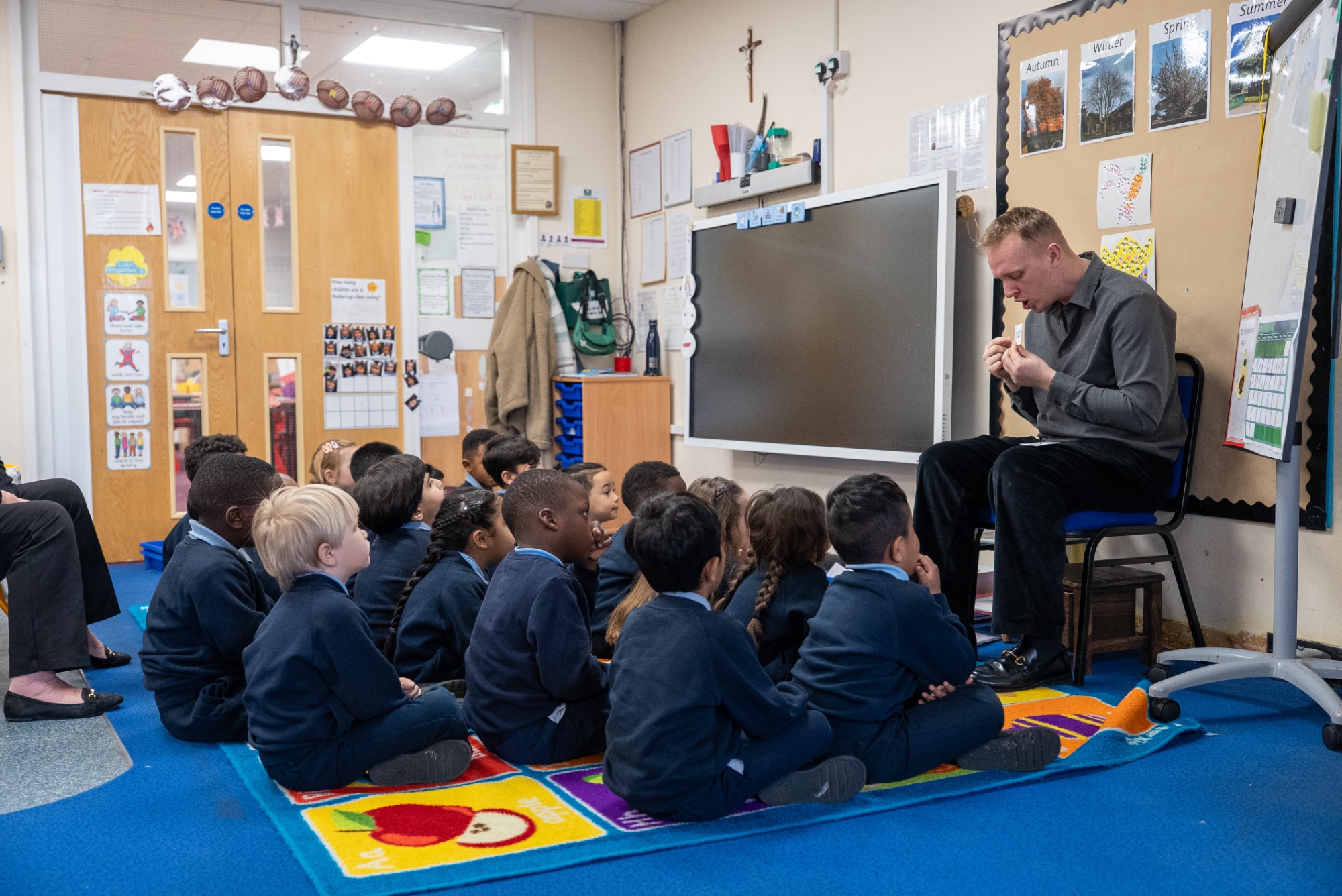
Our daily phonics sessions
- We begin every phonics lesson by revisiting previous learning. Usually this is previous GPC’s (grapheme phoneme correspondence), high frequency words and words with the GPC’s in them.
- The second part of the phonics lesson introduces the new GPC for that day and focuses on oral blending. This part of the phonics session also exposes children to words that contain the new GPC for the day. For every word, the children will hear a definition so that they understand what the word means.
- The third part of the session introduces children to a new tricky word. In this part of the session, the teacher will point out the tricky parts of the word with the children and the parts they can hear.
- The fourth part focuses on a sentence. The sentence will contain words with the new GPC and the new tricky word. Children will either read or write the sentence.
- The final part of the lesson focuses on spelling. The children learn to spell using the letter names.
Support for parents
1. Reading Practice Book
-
This book matches your child’s current phonics level. It’s okay if it feels easy reading with confidence helps them build fluency.
-
Listen to your child read aloud and celebrate their successes with praise.
-
If they struggle with a word, read it to them, then let them continue.
-
After reading, talk about the story together to strengthen their understanding.
2. Sharing Book
-
This book may be more challenging and is meant to be enjoyed together.
-
Read it aloud with your child or take turns reading.
-
Talk about the pictures, predict what might happen next, or explore facts in non-fiction books.
-
The main goal is to have fun, enjoy the story, and nurture a lifelong love of reading.
The resources on this page will help you support your child with saying their sounds and writing their letters. There are also some useful videos so you can see how the children are taught and feel confident about supporting their reading at home.